
Cass County Criminal Court Cases
Cass County criminal prosecutions are filed in the Iowa District Court for Cass County, part of Judicial District 4. The Cass County Clerk of Court keeps the official case file. That file is distinct from a sheriff report, a jail roster entry, or an Iowa Division of Criminal Investigation record. The prosecutor files charges and litigates the case, but the County Attorney is not the public custodian of the court file.
The Iowa Judicial Branch Cass County directory identifies the local court and clerk channel. The clerk can explain whether a public record is available, direct a visitor to a public terminal, and handle requests for ordinary or certified copies. Staff cannot give legal advice. Cass County court records may show a filed charge, later amendments, hearings, orders, judgment, sentence, and the result for each count.
Cass Court Cases Online
Iowa Courts Online is the statewide discovery layer for Cass County criminal court cases. Basic public case information is free. A user may search by case ID or party details, narrow results to Cass County, and open the Case ID for more detail. Some document links work only for subscribers or at a clerk's public terminal. A visible case index is useful, but it is not the same as a certified court record.
The official Iowa Courts Online search screen illustrates the statewide route used to locate Cass County court cases.
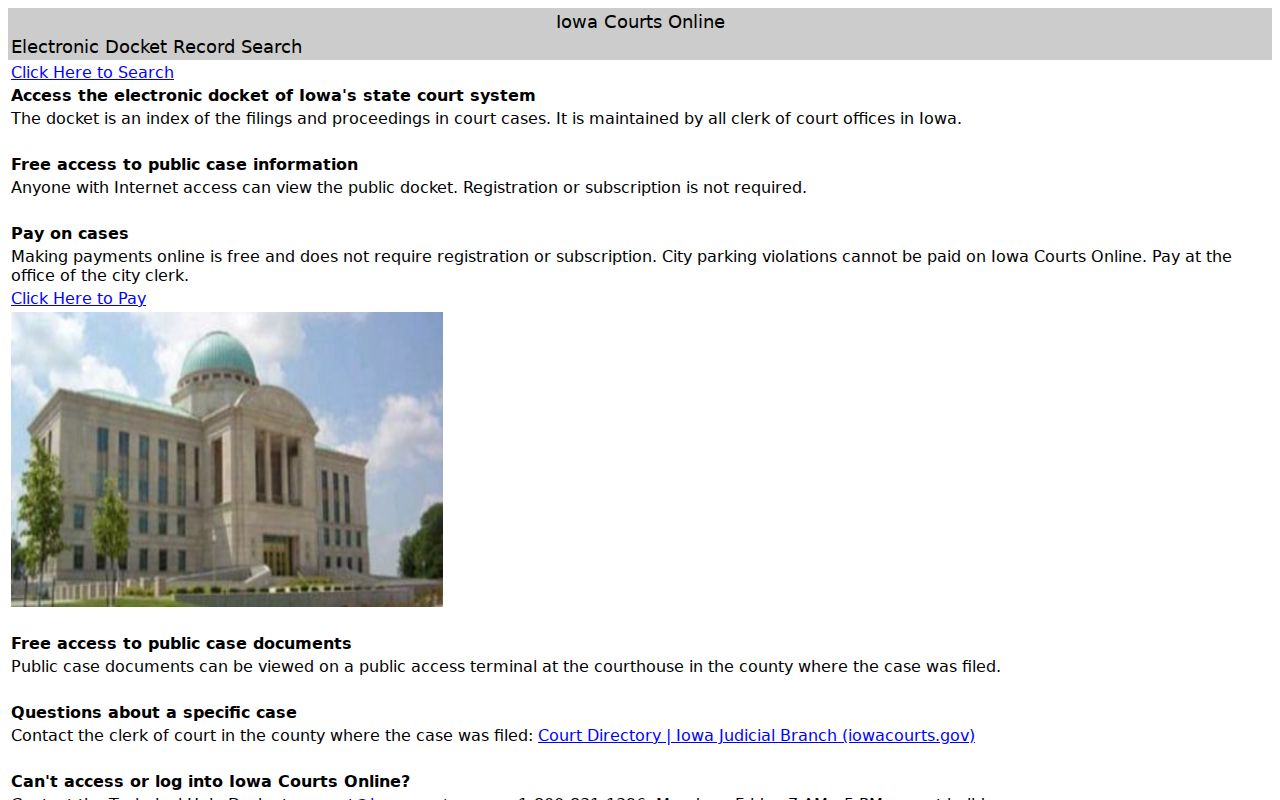
The screen is the starting point for discovery. The Cass County clerk supplies the authoritative copy when the exact wording or certification matters.
Searching Cass County Case Records
Start with the strongest identifier available. A full case number is more precise than a name, while county, case type, and date filters can reduce false matches. Preserve every letter and number in a case ID. When a name search fails despite solid reason to expect a filing, ask the clerk about an alias, a prior legal name, or a case-number search.
- Open Iowa Courts Online and choose the trial-court search.
- Enter the case ID when known, or search by last and first name.
- Select Cass County, then narrow by case type or date range if the interface offers those fields.
- Open the Case ID and read events in date order, including filed charges, pleas, orders, disposition, and sentencing.
- Call or visit the Cass County Clerk of Court for documents, a certified disposition, or help with a public-terminal link.
The search fields documented in the official court help identify how broad or narrow a Cass County criminal case query can be.
| Field Label | Type | Required | Notes |
|---|---|---|---|
| Case ID / Case Number | Text | No | Best direct route when known; preserve the complete sequence. |
| Last Name | Text | Conditional | Primary party-name search field. |
| First Name | Text | No | Narrows people with the same surname. |
| County | Dropdown | No | Select Cass for local court records. |
| Case Type | Dropdown | No | Criminal categories vary with the interface. |
| Date Range | Dates | No | Limits filing or event years where offered. |
| Role | Dropdown | No | Filters a party role where shown. |
Cass County Clerk Counter
The local counter adds what an online index cannot. The Cass County Clerk of Court is at 5 W. 7th St., Atlantic, IA 50022. Its published hours are weekdays from 8:00 a.m. to 4:30 p.m. Call 712-243-2105 before a visit to confirm access, copy procedure, certification needs, and current building conditions. The office also lists fax 712-243-4661, but a requester should confirm the fax process before sending a court-record request.
The official Cass County clerk page shows the contact and courthouse-counter information.
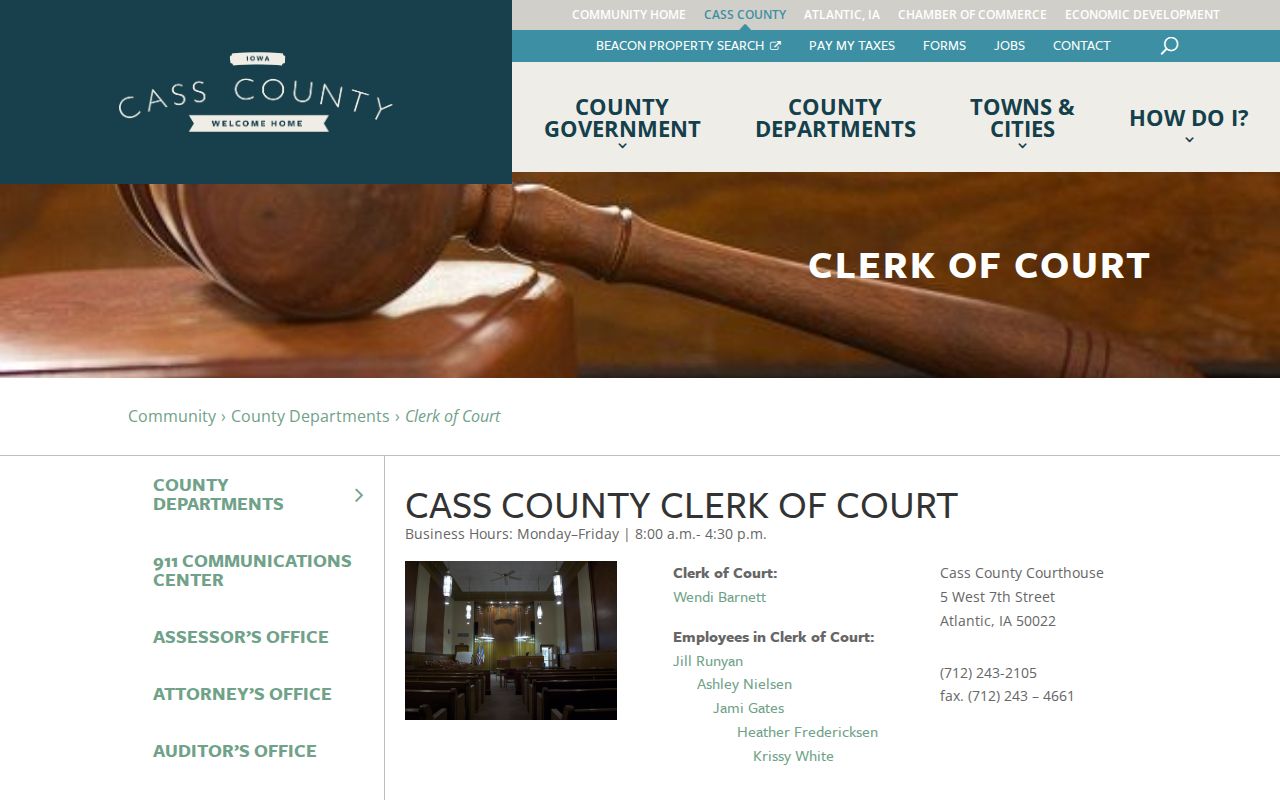
Use the clerk when a search result lacks a viewable document, when a certified judgment is needed, or when a name search may have missed an alias.
Cass County Clerk of Court
5 W. 7th St.
Atlantic, IA 50022
712-243-2105
Monday-Friday, 8:00 a.m.-4:30 p.m.
Inside a Cass County Case File
A Cass County criminal case file ties each court event to one case ID. Read the whole sequence. An early charge line may not match the final count, and a hearing entry alone does not state the outcome. The disposition and judgment fields are more useful for determining whether a count ended in conviction, dismissal, acquittal, or another court result.
| Case Number & Court | Identifies the Cass County case, Iowa District Court, case type, filing date, and public status. |
|---|---|
| Charges & Counts | Lists descriptions, level or class, statute, and any filing or amendment history. |
| Docket Entries | Chronology of filings, motions, hearings, orders, warrant action, judgment, and financial events. |
| Parties & Attorneys | Shows public party roles, counsel, and the judicial officer where recorded. |
| Disposition & Judgment | Reports the outcome by count and the judgment date when public. |
| Sentence & Conditions | May show incarceration, probation, fines, costs, restitution, and public financial assessments. |
| Documents | Availability varies; some links require a subscription or courthouse terminal, while sealed material stays unavailable. |
Note: A filed charge describes the accusation before the court; the final judgment identifies the count and outcome the court actually entered.
Reading Cass Criminal Docket Events
Docket entries make more sense as a timeline. A complaint or trial information begins the filed court record. An initial appearance addresses the first court contact. Arraignment records a plea, while later entries may show motions, hearings, amended charges, orders, and trial settings. The judgment and sentencing entries come near the end, though an appeal or later order can add to the file.
Common terms need plain meanings. A disposition is the recorded result of a count. An arraignment is the stage at which the accused answers the charge. A docket is the dated list of actions in the file. A deferred judgment is a distinct Iowa outcome and should not be casually labeled a conviction without reading the order and current record status.
- Case ID
- The court's unique identifier for the filing.
- Docket event
- A dated action, filing, hearing, or order in the case.
- Disposition
- The court's result for a charge or count.
- Certified copy
- An official copy authenticated by the clerk.
How a Criminal Case Moves
A Cass County arrest does not itself create a conviction or even guarantee a court filing. Once the prosecutor files a case, the court record tracks the charges through arraignment and pretrial work. A plea or trial resolves the factual and legal questions, followed by a disposition. Sentencing records the court-ordered consequence when a conviction or other qualifying result calls for one.
Case flow: Charges Filed › Arraignment › Pretrial › Plea or Trial › Disposition › Sentencing
The flow can branch. Counts may be amended or dismissed. Hearings can be reset. A case can also produce different results on separate counts. Readers tracing the earlier custody event can compare the filed case with the county's Cass County arrest lookup, but the court docket controls the filed charge and judicial outcome.
Cass Court Cases or Federal Cases
State charges from Cass County ordinarily appear in Iowa District Court. A federal criminal matter belongs to the U.S. District Court for the Southern District of Iowa and will not ordinarily appear in the state court index. PACER is the official federal docket system. It requires registration, and federal judiciary fees may apply under current PACER policy.
The official PACER search interface shows the separate route used when a Cass County matter belongs to federal court.
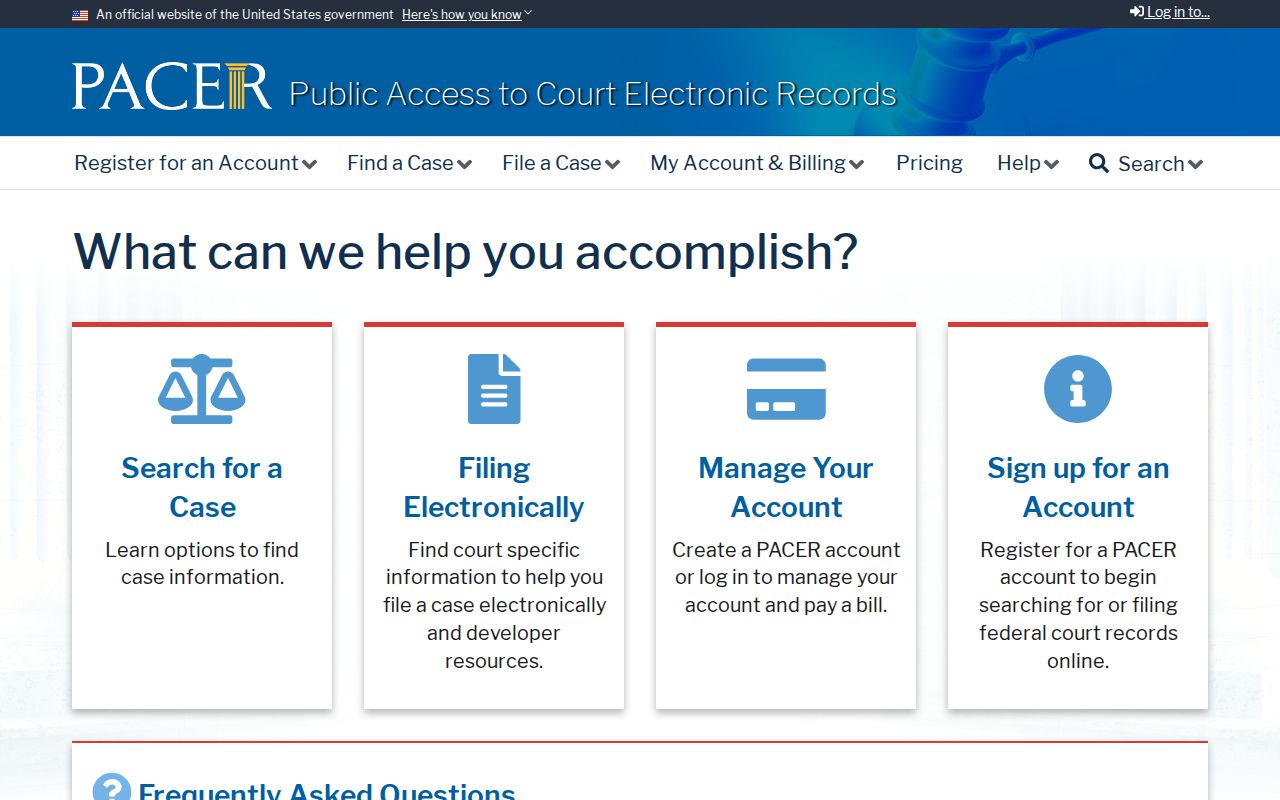
This federal layer should not be mixed with Iowa Courts Online. The court system, case ID, custodian, and document-access rules are different.
Post-sentence federal custody is also separate. The Federal Bureau of Prisons inmate locator searches federal custody by name or identifying number.
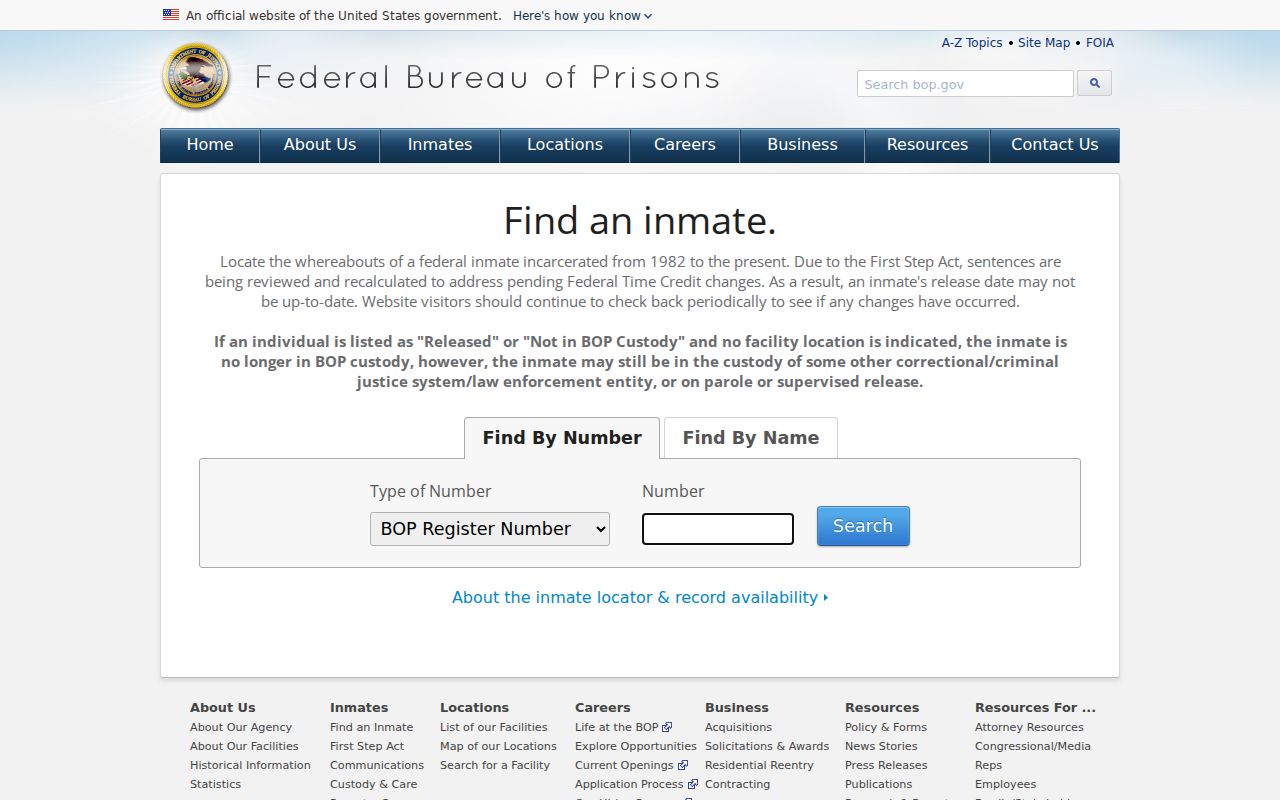
A custody match can help locate a person after sentence, but it does not replace the federal docket or the filed judgment.
Cass Court Custodian Roles
The clerk and County Attorney occupy different roles. The clerk keeps the filed court case. Cass County Attorney Vanessa Strazdas prosecutes state-law and county-ordinance matters described by the county office, but the prosecutor's working file may contain material that is not part of the public court record. Defense files may also hold confidential communications and work product. Ask the clerk for filed pleadings, orders, docket records, and judgment documents.
The Cass County Attorney's Office also runs a Delinquent Fine Program. A payment plan may help an eligible participant address driving or vehicle-registration consequences. It does not erase a conviction, change the judgment, or serve as expungement. Financial entries in the court case remain tied to the actual docket and orders.
Case Record Access & Restrictions
Public access to Cass County court cases is broad but not absolute. Online views may omit personal identifiers. Juvenile matters, protected victim information, sealed files, and documents made confidential by statute or court order may be restricted. Some public documents may be visible only through a subscriber link or courthouse terminal. A blank link or missing online case is not proof that no record exists.
Iowa's Open Records Law governs many county records, while Judicial Branch rules control court-file access. Iowa Code chapter 692 separately governs DCI criminal-history dissemination. A court docket and a DCI record can therefore show different public information. If DCI lacks a disposition that the court has entered, obtain the case number and certified disposition from the clerk before using DCI's subject-access and challenge process.
Search limits can also cause a false miss. Check spelling, prior names, county selection, and the full case-number format before drawing a conclusion. If the filing still does not appear, give the clerk the facts that support the request without sending unneeded sensitive data. The clerk can say whether a public terminal, paper file, or different search key is the right next step. It can also explain the process for copies, though it cannot interpret the legal effect of an order.